Exclusive: Ex-Meta Superintelligence Labs Director Launches Ndoc, The AI-Native Workspace Built to Upend Microsoft Office and Google Workspace
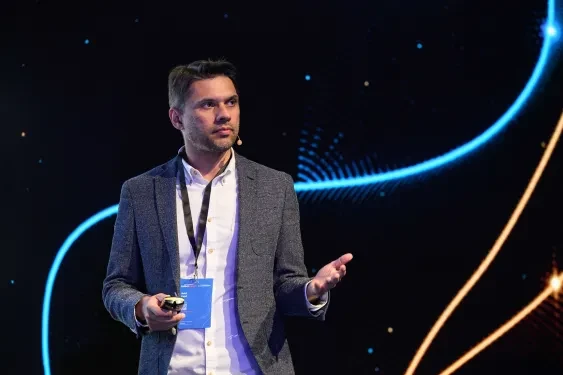
TechCrunch has learned exclusively that Rohit Patel, an eight-year Meta veteran and former director at Meta Superintelligence Labs, has departed the social AI giant to launch his own productivity startup.
Patel is the latest high-profile senior leader to exit Meta in a recent wave of departures, following Chief Global Affairs Officer Joel Kaplan, prominent AI researcher Andrew Tulloch, and Emily Dalton Smith, Meta’s former Head of Product for AI for Work. His new venture, Ndoc, is pitched as a fully AI-native, end-to-end replacement for legacy productivity suites that have dominated knowledge work for decades.
No More Band-Aid AI Add-Ons for Fragmented Workflows
Unlike nearly all existing AI productivity tools that are layered as afterthoughts on top of pre-existing legacy workflows, Patel designed Ndoc from the ground up to eliminate the disjointed, multi-tool work patterns most teams rely on today. Instead of forcing workers to jump between Excel, Word, PowerPoint, Tableau, Replit, and generative AI chat windows while copying and pasting data back and forth, Ndoc unifies every step of the analysis and collaboration process in a single shared workspace that even users without a paid Ndoc account can access.
The platform combines three core, seamlessly linked components in one clean layout:
The Stage tab: The public-facing presentation layer, where stakeholders access finished key findings in the form of slide decks, live interactive dashboards, dynamic simulations, and lightweight custom mini-apps
The Narrative tab: The structured analysis layer, complete with numbered verifiable citations, auto-generated figures, and full context explaining the "why" behind every data point
The Model tab: The back-end data layer that houses all raw underlying datasets and associated Python scripts that power calculations across the workspace
That deliberate three-part structure is directly shaped by Patel’s tenure at Meta, where he specialized in reinforcement learning (the machine learning subset where AI agents learn to make high-stakes decisions via trial and error to maximize targeted rewards) and frameworks to audit the trustworthiness of AI-generated outputs. Patel’s core thesis is simple: if AI is generating the spreadsheets and presentations companies use to make major business decisions, no output should be locked inside an un-auditable black box.
"Even if you don’t know any Python, you can ask the built-in AI chat to explain, ‘Hey, what does this script do? Which line has my formula?’ And you can verify that formula directly," Patel told TechCrunch. "There’s nothing hidden behind the curtain here."
In practice, users can upload a raw dataset, prompt Ndoc to run a full end-to-end analysis and draft a narrative walkthrough of key findings, and add custom per-document context including target audience, desired tone, and persistent memory that spans individual user preferences, specific document history, team norms, and company-wide institutional knowledge.
A Radical Ambition To Reinvent The Digital File
Patel built and fine-tuned Ndoc on a curated stack of open-source AI models, rather than relying entirely on expensive third-party frontier model APIs, making its operating costs far lower than competing AI productivity tools. But he noted early trial users barely care about that cost savings benefit:
"I thought that’s what people would be excited about, but no one cares about that. What people are excited about is that they love seeing all their end-to-end work, from raw data to final stakeholder presentation, in one place."
His far larger, long-term ambition is to completely reimagine the very concept of the digital document. All Ndoc workspaces can be exported as a single lightweight
.ndoc.htmlfile that opens natively in any standard web browser, no special software required. He plans to fully open-source this file format, so third-party developers can build native integrations and tools that work with.ndocfiles without being locked into the Ndoc platform the way millions of teams have been trapped in Microsoft or Google’s proprietary ecosystems for decades. That open standard goal was a core reason he chose to leave Meta to build independently: at a company of Meta’s scale, aligning hundreds of stakeholders to sign off on a new open file format would have dragged on for years in endless meetings."Humans can only move at human pace, whereas… I can move at the pace of what AI can do."
Taking On The Biggest Players In Enterprise AI
Betting everything on building the default platform for all enterprise knowledge work is an extraordinarily high-stakes move for a founder running a 3-person team with no outside funding, when every major AI player is fighting to dominate the same space. OpenAI, Anthropic, Meta, Google, and SpaceXAI have all launched enterprise AI tools that integrate natively with Google Workspace, Microsoft 365, and other common workplace apps, and OpenAI’s recent launch of Space — a shared collaborative workspace built directly into ChatGPT — is a direct, high-profile competitor to Ndoc.
Patel acknowledges the competition, but argues nearly all big AI labs are approaching the problem entirely wrong:
"Companies are basically attaching AI to spreadsheets and it fills your cells for you. It just sort of kills my soul. This is like if you just figured out electricity, and then you decided the best use case is to put lights on the oxen that till your soil. No. You get a tractor."
He is aware that changing ingrained work habits and replacing decades-old workflows is a massive hurdle, which is why he built pre-built connectors that let users import all their existing data from the legacy tools they already use, no full rip-and-replace required. He also has no plans to rush to raise funding until he has clear, verified proof users love the product. As of Tuesday, Ndoc is running a closed enterprise pilot and opening a limited alpha to waitlist users: sign-ups are free, with customers paying only for usage and compute tokens later. He plans to roll out a public beta in the coming weeks, with a full public launch targeted for next year.
For Patel, speed of execution beats chasing a perfect polished product out of the gate:
"Execution is extremely cheap… so go execute on a suboptimal plan and worry about it later. By the time you make the best plan, the execution will be done by somebody else."
Exclusive: Ex-Meta Superintelligence Labs Director Launches Ndoc, The AI-Native Workspace Built to Upend Microsoft Office and Google Workspace