GM Invests Over $2B in Lansing Facilities to Scale Hybrid Production, Adjusting Its Long-Standing Electrification Roadmap
The landmark investment marks the U.S. legacy automaker’s latest strategic pivot to recapture lost market share by aligning its product lineup with rapidly shifting consumer preferences.
Breakdown of the Lansing Regional Investment
General Motors announced Tuesday it will pour more than $2 billion across its entire Lansing, Michigan footprint over the next several years, with $1.25 billion earmarked specifically for upgrades at the Lansing Delta Township Assembly plant to support future hybrid-electric vehicle manufacturing.
The company also confirmed it is collaborating with the U.S. Department of Energy to restructure a previously awarded Domestic Manufacturing Conversion Grant, redirecting those unspent funds to the upcoming hybrid production line at the Delta Township site. Originally, the $500 million grant issued under the Biden administration was allocated to a separate Lansing factory to support conversion work for a full suite of electrified vehicles: hybrid, battery-electric, plug-in hybrid, and hydrogen fuel cell models. GM notes none of that initial grant funding was ever disbursed prior to the restructuring.
Upcoming Hybrid Lineup for the Delta Township Plant
Currently, the Lansing Delta Township facility exclusively builds internal combustion engine models: the gas-powered Buick Enclave, Chevrolet Traverse, and GMC Acadia. The site hit a historic production record in 2025, rolling out 291,000 total vehicles.
GM has not released a public timeline for when it will launch production and sales of its new hybrid lineup. However, multiple people familiar with the plans told TechCrunch the hybrid rollout will span multiple GM brands rather than being limited to a single nameplate, a detail corroborated by a separate Reuters report citing anonymous insiders that confirmed hybrid variants of the Traverse, Enclave, and Acadia will all be assembled at the Michigan factory. The automaker stated it will share full, specific details of the hybrid production schedule closer to the official launch date.
Market Context Driving GM’s Hybrid Pivot
Rising gasoline prices in the U.S. have pushed hybrid models to soaring mainstream popularity in recent years, with nearly all major automakers now offering a full range of hybrid and plug-in hybrid options to meet growing consumer demand. Toyota currently leads the U.S. hybrid sales market, followed by Honda, while Ford has posted explosive hybrid sales growth over the past two years, moving roughly 228,000 hybrid units in 2025 alone.
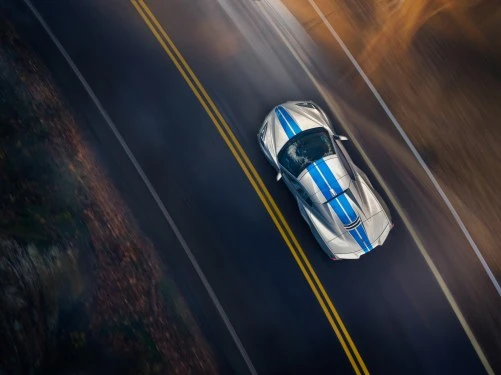
GM has lagged far behind its competitors on hybrid deployment up until now. Its only mass market hybrid offering to date was the Chevrolet Corvette E-Ray, launched as a 2024 model, of which GM sold just 2,444 units last year. The E-Ray has since been phased out; GM began customer deliveries of the new hybrid Corvette ZR1X this March, and will launch its hybrid Corvette Grand Sport X performance model next year.
Revised Electrification Strategy Under New Policy Landscape
For years, GM intentionally sidelined hybrid development entirely to prioritize an aggressive battery-electric only transition, investing tens of billions of dollars to rework its entire internal combustion product portfolio for full electrification. That core strategy shifted drastically under the Trump administration, following the elimination of the federal EV tax credit and far slower than projected consumer demand for pure battery-electric vehicles.
GM has not abandoned its EV lineups entirely, even as its full-electric sales posted year-over-year declines. The brand still sells a full slate of battery-electric models across its portfolio, including the Chevrolet Equinox EV, Blazer EV, and Cadillac Escalade IQ, framing the new hybrid investment as a flexible middle ground that meets current consumer needs without abandoning its long-term zero-emissions goals.
GM Pours Over $2 Billion Into Lansing Manufacturing Footprint For Upcoming Hybrid Vehicle Production