Silicon Valley’s Dangerous New Fantasy: Outsourcing Intimate Human Connection to AI for "Frictionless Efficiency"
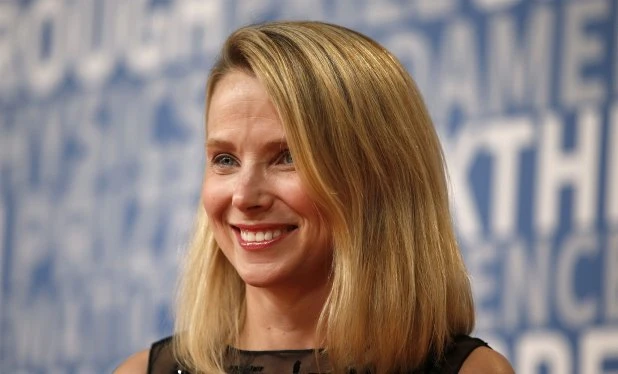
Former Yahoo CEO and early Google engineer Marissa Mayer has faced widespread public backlash over a series of eyebrow-raising comments about the use cases for her new AI product Dazzle, an assistant trained to pull insights from a user’s entire camera roll. During a press interview to promote the app, Mayer highlighted what she framed as an impressive, standout feature of the prototype: Dazzle generated three short bullet points describing her 10-year-old daughter for a school birthday presentation, labeling the child “empathetic, creative, and an animal lover.”
The descriptors are so generic, they read like a throwaway line from a mass-produced horoscope—vague enough to apply to almost any average 10-year-old, with no specific, personal detail unique to Mayer’s own kid. Progressive activist Leah Greenberg summed up the widespread public eye-roll perfectly, noting that Mayer’s choice to volunteer that unremarkable anecdote unprompted to a reporter is a near-perfect demonstration of just how deeply Silicon Valley’s insulated, bubble culture has diverged from the lived reality and core values of most regular people.
This swift, fierce backlash against Mayer did not come out of nowhere. For years, the public has watched sheltered, ultra-wealthy tech executives float increasingly unmoored suggestions that we offload life’s most intimate, human tasks—including childrearing, a practice that tests every caregiver’s patience, humility, and capacity for gentle care—to AI systems that have no actual ability to comprehend, let alone feel, human emotion. The public has long been primed for this specific frustration. Last year, OpenAI CEO Sam Altman told Bored Ape NFT collector and late-night host Jimmy Fallon on national television that he “could not imagine” navigating the chaos of raising a newborn without ChatGPT. That remark was widely panned by parents across social media, but Altman showed no signs of backing down. Just a few months back, he posted to X praising what he called a “cool use case” for the new ChatGPT Work platform: generating a fully produced podcast that recaps your kids’ upcoming birthdays, weekend soccer game schedules, and breaks down your children’s personal interests for you. The response to that post was so overwhelmingly negative—top replies included blunt lines like “What if you just, you know, talked to your own kids?”—that he was thoroughly ratioed within hours.
After the initial wave of criticism blew up, Mayer posted a lengthy defense on X, claiming she was never actually relying on Dazzle to learn basic facts about her own daughter. She argued she was simply testing the prototype’s ability to pull up long-forgotten photos, including snapshots of her daughter’s kindergarten art projects named a “snake devenomer” and a “sandcat playground,” to illustrate those core traits rather than invent them out of thin air. That explanation may hold partial water, but it does not erase other equally jarring comments she made in the same interview. Mayer explicitly suggested users could offload the mental labor of picking a theme for their child’s birthday party to her AI tool, and noted she already uses Dazzle to arrange her daughter’s playdates, book family vacation activities, and even brainstorm group Halloween costumes for the whole family. She went even further to float a future where her personal AI assistant coordinates plans directly with her husband’s separate AI assistant, with no human back-and-forth required. When the interviewer asked if that totally frictionless, AI-planned future sounded depressing, Mayer admitted, “I haven’t really thought that through.”
To many in Silicon Valley’s executive class, these criticisms from everyday people look like nothing more than the grumbling of a small, fringe, anti-tech angry crowd. But empirical data contradicts that dismissive take: a 2024 Pew Research Center survey found that 50% of U.S. adults believe the rise of AI will actively erode people’s ability to build and sustain deep, meaningful human relationships, while a mere 5% of respondents said they thought AI would make it easier to form those real, lasting connections.
Meta CEO Mark Zuckerberg, for his part, is fully aligned with his fellow Silicon Valley leaders in painting a future where our core social and emotional needs are met by AI, not other people. “The average American has fewer than three people they consider close friends, right? And most people say they want far more than that, something like 15 real close friends,” Zuckerberg argued on a podcast last year. “People crave far more connection than they’re currently getting.” He went on to predict that very soon, delegating our emotional labor to AI therapists, or even romantic AI partners, will become completely socially normalized. “In-person connections are better, of course, whenever you can have them,” he added, “but the reality is most people feel far more lonely far more often than they want to.” Zuckerberg has repeatedly highlighted that Meta is pouring billions into making hyper-realistic VR AI avatars, rather than fixing the well-documented harms his platforms cause to real human social connection across the billions of real people who use Instagram, Facebook, and Threads every day.
This distorted set of priorities traces directly back to the tech industry’s core cultural value that puts maximum efficiency above all else. Silicon Valley workers and executives alike chase every possible productivity hack, from biohacking their bodies with health trackers that optimize every minute of their sleep schedules, to injecting untested, unregulated “peptide stacks” to squeeze more work out of every waking hour. That singular focus on efficiency makes perfect sense when you’re building electric vehicles or designing the latest high-performance microchip, where cutting out unnecessary steps directly leads to a better product. But human relationships are not SaaS products you’re trying to ship on a tight budget with the smallest possible team. Deep human connections are messy, inconvenient, and often inefficient—but those very messy, unplanned moments are the exact things that give most people’s lives their meaning. When we offload those messy, personal interactions to AI tools in the name of cutting down on friction, we don’t just save a little time—we give up the messy, deeply rewarding experience of showing up for the people we love, and being fully human in the process.
Silicon Valley’s Dangerous New Fantasy: Outsourcing Intimate Human Connection to AI for "Frictionless Efficiency"